01 — History & Positioning
A 150-Year Family Saga
In the heart of Walloon Brabant, in Quenast, stands a brewery whose story began in 1876, when Jules Lefebvre founded the brewery to quench the thirst of thousands of workers toiling in the village's rich quarries. The Lefebvre family grew up here, at the heart of their brewery. Close to their product, they cultivated an authentic passion for beer, blending tradition with modernity.
What was meant to remain a local business transformed, generation after generation, into a true Belgian success story. Today, Brasserie Lefebvre embodies a unique economic model: neither artisanal nor industrial, but an assumed "in-between" size. With about fifty employees, over 75% of its production is exported to more than 50 countries, making it a major player in the "glocal" approach: exporting massively while maintaining its legitimacy in Belgian terroir.
"Dad (fifth generation) made his mark in exports. He offered products for those who wanted to stand out in foreign markets. He thus developed the 'Blanche de Bruxelles' which remains a reference." — Céline Lefebvre, CEO, 6th generation
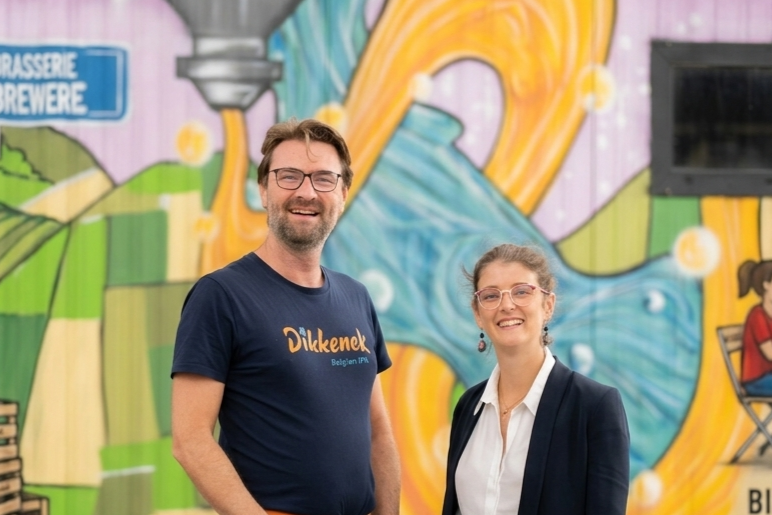
The 6th generation is an unprecedented sibling alliance: Céline (business graduate, administrative side) and Paul (brewing engineer, production side). They embody a modern vision of the brewery: a human-sized company, but resolutely focused on innovation and sustainability.
And the succession is already assured: the 7th generation runs between the barrels in the cellar, ready to write the next chapter of this 150-year story. But Brasserie Lefebvre is much more than a business: it's a living space, a place where the family celebrates important moments, thus perpetuating the convivial spirit that animates each bottle.
"Next year, we'll celebrate our 150th anniversary. I'd like this brewery to last another 150 years. For that, we need to take care of our soils, take care of our farmers. This seems extremely important to me." — In 2025, Céline Lefebvre, CEO, 6th generation
Timeline: Key Dates of Brasserie Lefebvre
02 — Sustainability & Innovation
An Eco-Responsible and Creative Commitment
🌿 An Eco-Innovative Brewery
- Water: Wastewater treatment plant built in 2015. 15% reduction in water consumption in 2022, with a goal of an additional 15% reduction by 2024.
- Energy: 500 photovoltaic panels (2022) cover 15% of electricity consumption.
- Logistics: Centralization of activities on a single site in Quenast, with electric charging stations and bicycle facilities.
Relocalization of Raw Materials
"For several years, we have chosen to relocalize our honey supply, working with our beekeeping partner: Beelgium." — Brasserie Lefebvre
Product Innovation
The brewery rejects industrial dealcoholization. For its Ana Hop 0.4%, it uses a "lazy" yeast that naturally limits alcohol production, thus preserving the original taste.
03 — Tasting
Blanche de Bruxelles (4.5% vol.)
Style: Wheat beer, top fermentation.
Tasting: Fresh nose. Palate: orange zest, grapefruit, lemon, coriander. Soft finish, slightly acidic and sweet.
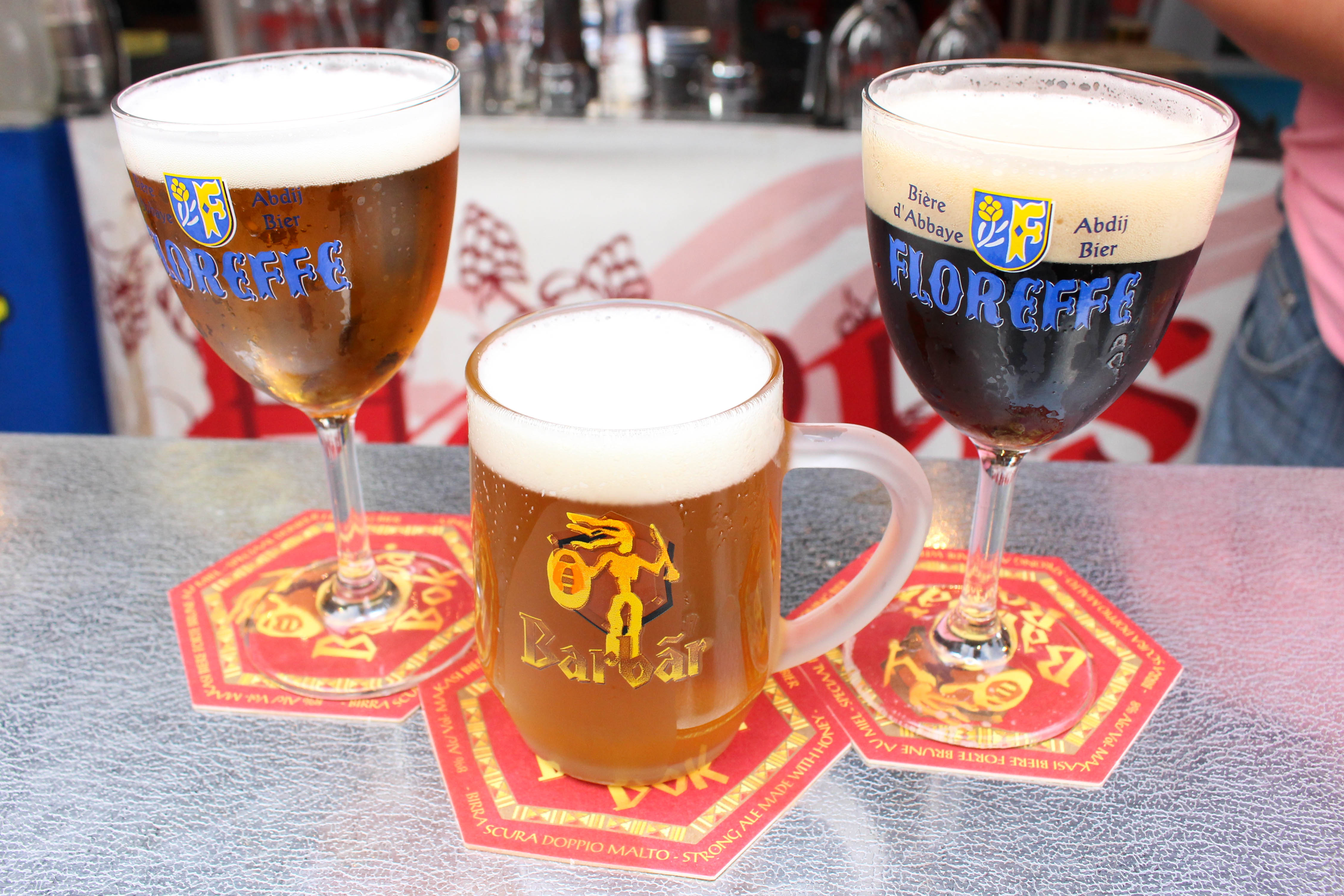
Floreffe Blonde (6.3% vol.)
Style: Blond abbey beer.
Tasting: Opalescent golden yellow, fine foam. Fruity nose (apple, apricot, stewed fruits). Palate: apricot, hops, greenery. Bitterness present but balanced.
Barbãr (8% vol.)
Style: Special blond beer with honey.
Tasting: Amber color, intense nose (flowers, honey, ripe fruits). Palate: explosion of honey without being too sweet.
Floreffe Triple (8% vol.)
Style: Triple abbey beer.
Tasting: Dark golden, generous foam. Hoppy nose (licorice, peach, apricot). Palate: round, sweet (rhubarb, apple, banana).
Floreffe Prima Melior (8% vol.)
Style: Dark abbey beer.
Tasting: Opaque brown, powerful aromas (figs, dates, caramel, roasting, chocolate). Palate: licorice, honey, slightly salty sweet flavor.
Hopus (8.3% vol.)
Style: Strong hoppy blond beer.
Tasting: Exception in the range with 29 IBU and after-bitterness. Full-bodied but balanced palate, hoppy with beautiful complexity featuring spicy, fruity (citrus, red fruits) and floral (white flowers) notes.
04 — Comparison
The Lefebvre range covers a remarkable spectrum: from the palest wheat beer to the most intense dark beer, including abbey beers with distinct characters. Rare editorial consistency for a brewery of this size, where each beer, despite its specificities, retains this unique signature: round, fruity (stone fruits and stewed fruits), non-aggressive.
🔬 What the Numbers Reveal
- Moderate bitterness: IBU ranges from 9 (Blanche de Bruxelles) to 29 (Hopus).
- Low turbidity: Barbãr (2.31 EBC), Triple (1.73 EBC), Prima Melior (2.19 EBC). This indicates technical mastery of hot and cold clarification. A saturated beer (not re-fermented in bottle) must shine! The brewery knows how to do it.
05 — Conclusion
Belgian Glocal: Exporting Without Denying Roots
Brasserie Lefebvre perfectly embodies the "glocal" paradox: exporting 75% of its production to more than 50 countries while relocalizing its raw materials and anchoring itself in its terroir. It offers a third way between artisanal microbrewery and industrial giant, with a clear ambition: to last another 150 years by combining tradition, innovation and sustainability.
Its economic model - an "in-between" size with about fifty employees - allows it to remain agile while radiating internationally. Its environmental commitment (reducing water consumption, solar energy, optimized logistics) and relocalization of ingredients (honey, malt) show that a brewery can be both global and local.
Finally, its organoleptic signature - round, fruity, non-aggressive - runs through its entire range, from light blondes to complex dark beers. A promise kept: to envelop the drinker without overpowering them, and to celebrate beer as an art of living, far beyond a simple product.
"We brew our beers as we love to share them, because what drives us every day is to be at the heart of your most beautiful celebrations." — Brasserie Lefebvre