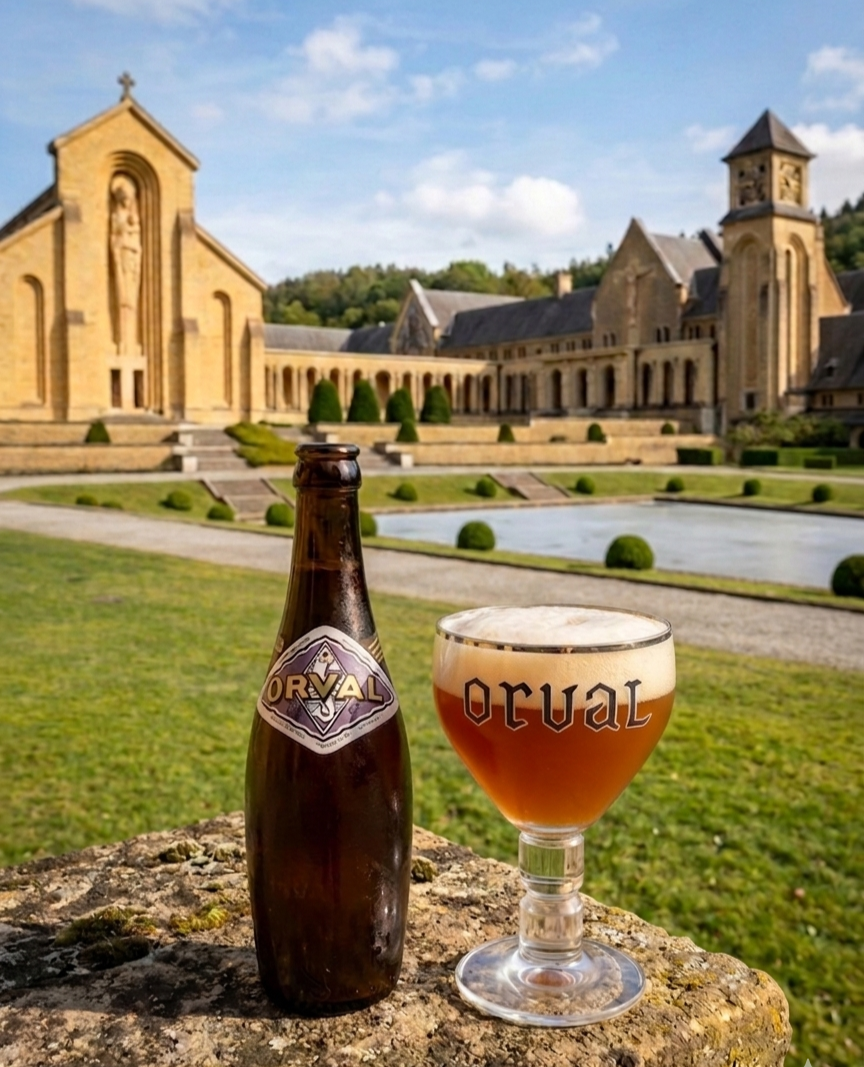
Orval, or "Golden Valley", is much more than just a beer. It's a place steeped in history, a symbol of monastic tradition, and a brewing legend. Nestled in the Belgian Ardennes, Orval Abbey gave birth to one of the seven Trappist beers in the world. Its rich and mysterious history is marked by centuries of monastic life, bold reconstructions, and brewing innovations. Among the notable figures in this history, Jean-Marie Rock, master brewer, played a key role in the evolution of this iconic beer.
1. The Origins of Orval: A Millennial History
The Legend of Princess Mathilde, the Fish, and the Ring
Legend has it that Princess Mathilde of Tuscany, while hunting in the forests of Gaume, stopped to quench her thirst at a spring. As she dipped her hand into the water, she lost her wedding ring, a memento of her late husband. Miraculously, a trout emerged from the spring with the ring in its mouth. Amazed by this miracle, Mathilde exclaimed: "This is truly a golden valley!" This legend inspired the name "Orval" and the beer's logo, featuring a trout with a ring in its mouth.
Monastic beginnings
The first Benedictine monks settled in Orval in 1070. The Cistercian order arrived in 1132, marking the beginning of a long monastic tradition.
The French Revolution
The destruction of the abbey by revolutionary troops and its reconstruction in the early 20th century.
2. The Orval Brewery: Between Tradition and Innovation
The abbey's rebirth
Under the leadership of Dom Marie-Albert Van der Cruyssen, the abbey was rebuilt, and a brewery was created to finance the work.
The first beer
Production of Orval beer began in 1932 using open fermentation tanks. After the war, the brewing monks of Orval perfected their knowledge at Scourmont Abbey (Chimay) with the renowned Father Theodore.
The cleaning cycles intensified and would have lost the slightly sour character linked to wild yeasts, the famous Brettanomyces. Brother Dominique identified the strain and had it reproduced until there was enough to seed the next brew.
The unique fermentation process
The Brettanomyces act in a second stage, after the main "classic" yeast has done its work. They attack the more complex sugars remaining in the brew and give Orval its unique taste.
"Dry hopping"(adding hops during or after cold fermentation) brings additional spicy and resinous aromas to Orval. These highly volatile and oxidation-sensitive aromas would quickly disappear during hot brewing.
3. Jean-Marie Rock: The Visionary Master Brewer
An unexpected journey
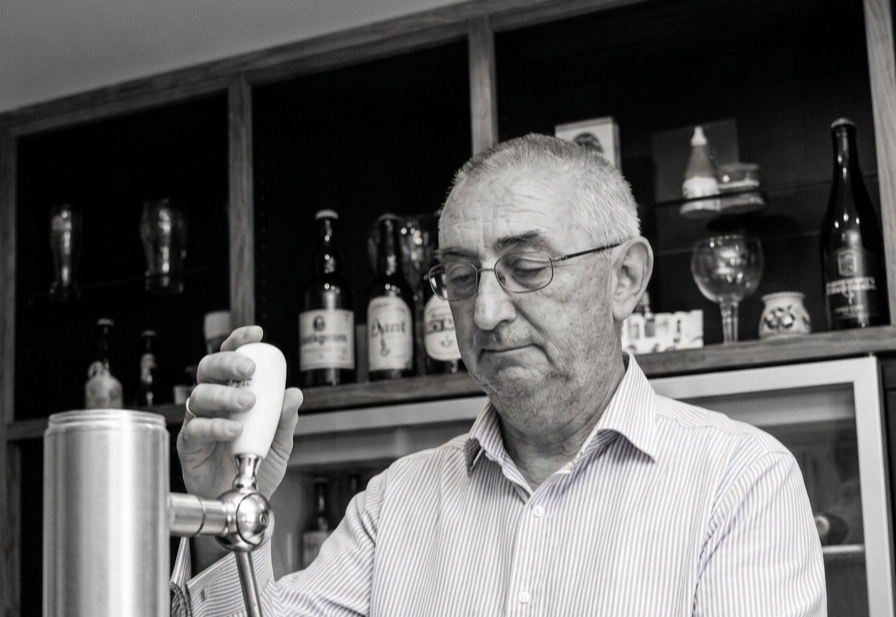
Former brewer at Palm, Jean-Marie Rock discovered Orval by chance in 1985 during a school trip with his children nearby. He learned that the position was available and soon became master brewer, marking the history of the brewery.
Modernization and innovation
Under his leadership, the Orval brewery underwent complete modernization, increasing production while preserving quality. He opened his own yeast propagation unit within the brewery walls.
The brewery was thus able to help surrounding breweries by sharing its technical expertise and offering its main yeast, as it did for the Rulles brewery.
Orval Vert
Jean-Marie Rock launched a unique version of the beer, Orval Vert, brewed specifically for the Ange Gardien inn.
4. Tasting: Young vs Old Orval
Orval tastes different depending on its age:
- Young: reveals all its hoppy power
- Old: develops unique complexity thanks to wild yeasts
It is also accompanied by a natural maderization process with aging (Sherry, Port, Madeira, candied fruits).
Young Orval
Characteristics: Pronounced bitterness, fresh hoppy notes, citrus and spice aromas.
Ideal for: Lovers of hoppy and refreshing beers.
Old Orval (3 years or more)
Characteristics: Reduced bitterness, increased complexity with "wild" touches (leather, stable, hay), cheese and apricot.
Ideal for: Patient tasters who enjoy evolving beers.
📊 Technical Specifications
Alcohol
6.2% vol.
Color (EBC)
26.0
Bitterness (BU)
29
Temperature
10-12°C
Complete Description
Appearance
Skittle-shaped bottle, simple label with trout and ring logo.
Ingredients
Water, barley malts, hops, candy sugar, yeast.
Color
Orange, amber and slightly opalescent.
Head
Very thick and creamy.
Aromas
Raw hoppy, phenolic notes, resin, lavender, spices, sulfur odors.
Taste
Marked bitterness, animal notes, apricot and citrus.
5. Visiting Orval: Practical Information
Self-guided Tours (or guided depending on schedule)
Discover at your own pace:
- Ruins of the old abbey and Mathilde's fountain
- Guest House with video animations
- Monastic history museum
- Medicinal plant garden
Opening Hours:
- Low season (Nov-Feb): 10:30 AM - 5:30 PM
- Mid season (Mar-May, Oct): 9:30 AM - 6:00 PM
- High season (Jun-Sep): 9:30 AM - 6:30 PM
Prices: From €8 (adults) - More info
Private Guided Tours
For groups of 20+ people (reservation required 15 days in advance):
- Duration: 1h30 (ruins and museum)
- Group rate: €6/adult, guide fee €65
- Picnic area available (60 seats)
Open Days
Next edition: September 18-19, 2026 (fully booked)
Online reservations from May 12, 2026: od.orval.be
Conclusion: Orval, a Living Legend
Orval is much more than a beer: it's a heritage, a legend that spans centuries. Thanks to men like Jean-Marie Rock, this tradition endures and continues to evolve while remaining true to its roots. Each sip of Orval is a journey through time, a tribute to the passion and audacity of the monks and brewers who made this abbey a unique place in the world.
Whether you enjoy it young and hoppy or aged and complex, Orval remains an unforgettable experience, reflecting its millennial history.